
¿Por qué "heavy-duty" significa algo más que tubos más gruesos o mayor potencia de motor en las bicicletas de carga?
Los gestores de flotas a menudo se centran en las cifras de carga útil cuando evalúan los triciclos de carga, pero la durabilidad real depende de los detalles de ingeniería ocultos bajo el bastidor. Entender lo que realmente define a un triciclo de carga de alta resistencia puede evitar costosos fallos en la flota.
Muchos responsables de compras ven la palabra "heavy-duty" en un folleto y asumen que significa irrompible. En realidad, la simple adición de material o potencia sin un equilibrio de ingeniería crea un vehículo más pesado, menos fiable y que falla más rápido.Los triciclos de carga pesados son una categoría especializada de bicicletas de carga diseñadas para flotas de reparto comerciales que transportan grandes cargas a diario.
La verdadera ingeniería de alta resistencia se centra en el "eslabón más débil" de la cadena mecánica. Aumentar el grosor del bastidor sin mejorar los ejes transfiere la tensión a los cojinetes, provocando un fallo inmediato. Del mismo modo, aumentar la potencia del motor sin reforzar el sistema de frenado crea un peligroso desajuste cinético. El término "resistente" se refiere a un sistema equilibrado en el que cada componente está dimensionado para la carga dinámica máxima, no sólo para el peso estático.
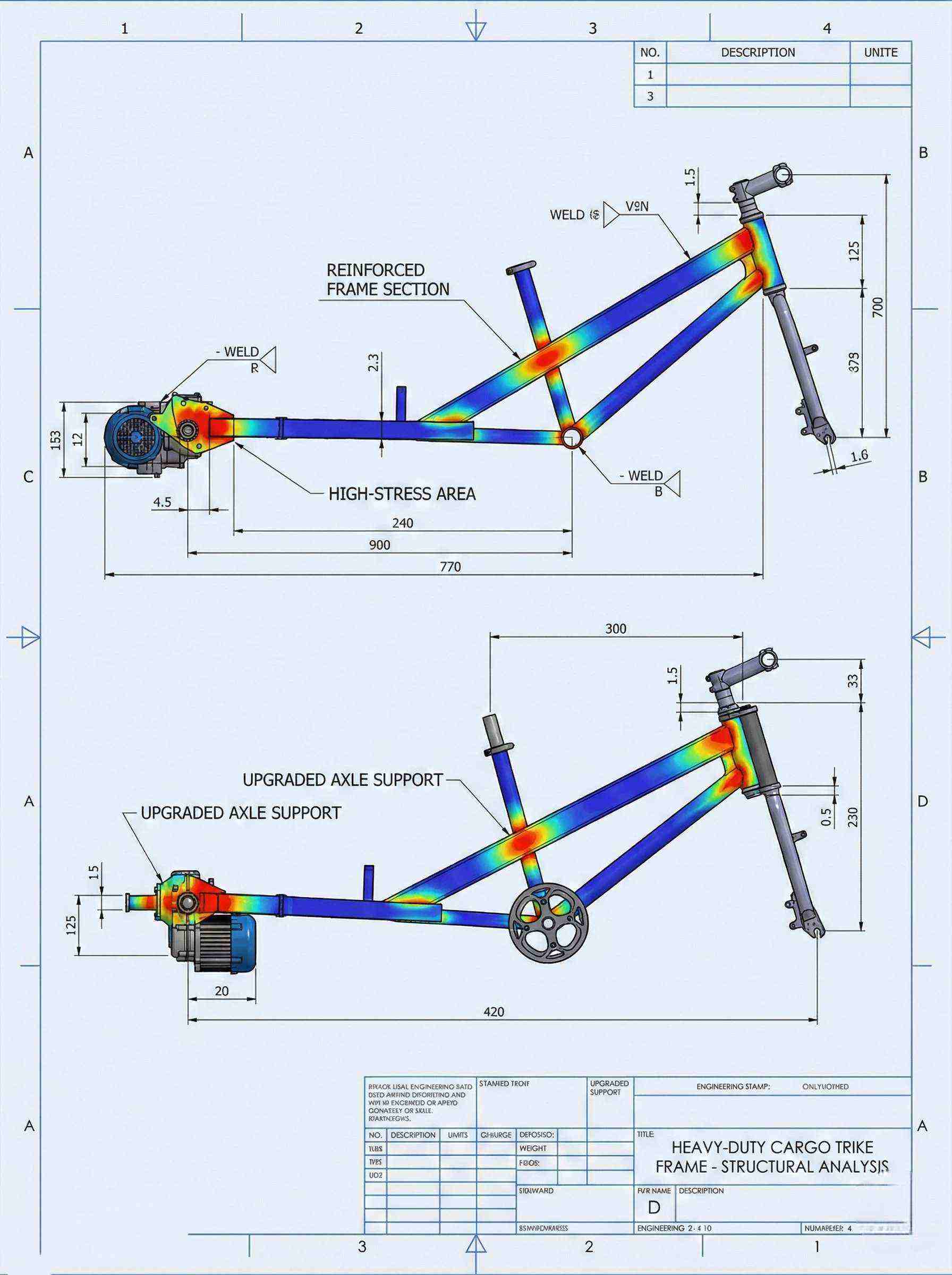
A menudo digo a mis clientes que una cadena es tan fuerte como su eslabón más débil. En el mundo de los triciclos comerciales, la "cadena" incluye el cuadro, las ruedas, el eje y el motor. Si se refuerza una parte pero se ignoran las demás, no se está construyendo un vehículo más fuerte; sólo se está trasladando el punto de fallo a un componente más caro. Para entender la durabilidad, tenemos que mirar más allá de las palabras clave de marketing y fijarnos en las relaciones mecánicas.
¿Cómo afecta la distribución de la carga a la estabilidad de un triciclo de carga o una plataforma para bicicletas de carga?
La estabilidad es la primera víctima de las malas prácticas de carga. Los conductores suelen apilar las cajas lo más alto posible, ignorando el hecho de que un triciclo se maneja de forma fundamentalmente distinta a una furgoneta de cuatro ruedas.
La distribución de la carga determina el centro de gravedad (CdG). En un sistema de tres ruedas, si el CoG se desplaza demasiado alto o demasiado atrás del eje trasero, el vehículo se vuelve inestable en curvas y subidas. Un diseño "heavy-duty" baja la plataforma de carga para mantener la masa cerca del suelo, evitando el "efecto vuelco" común en conversiones mal diseñadas.
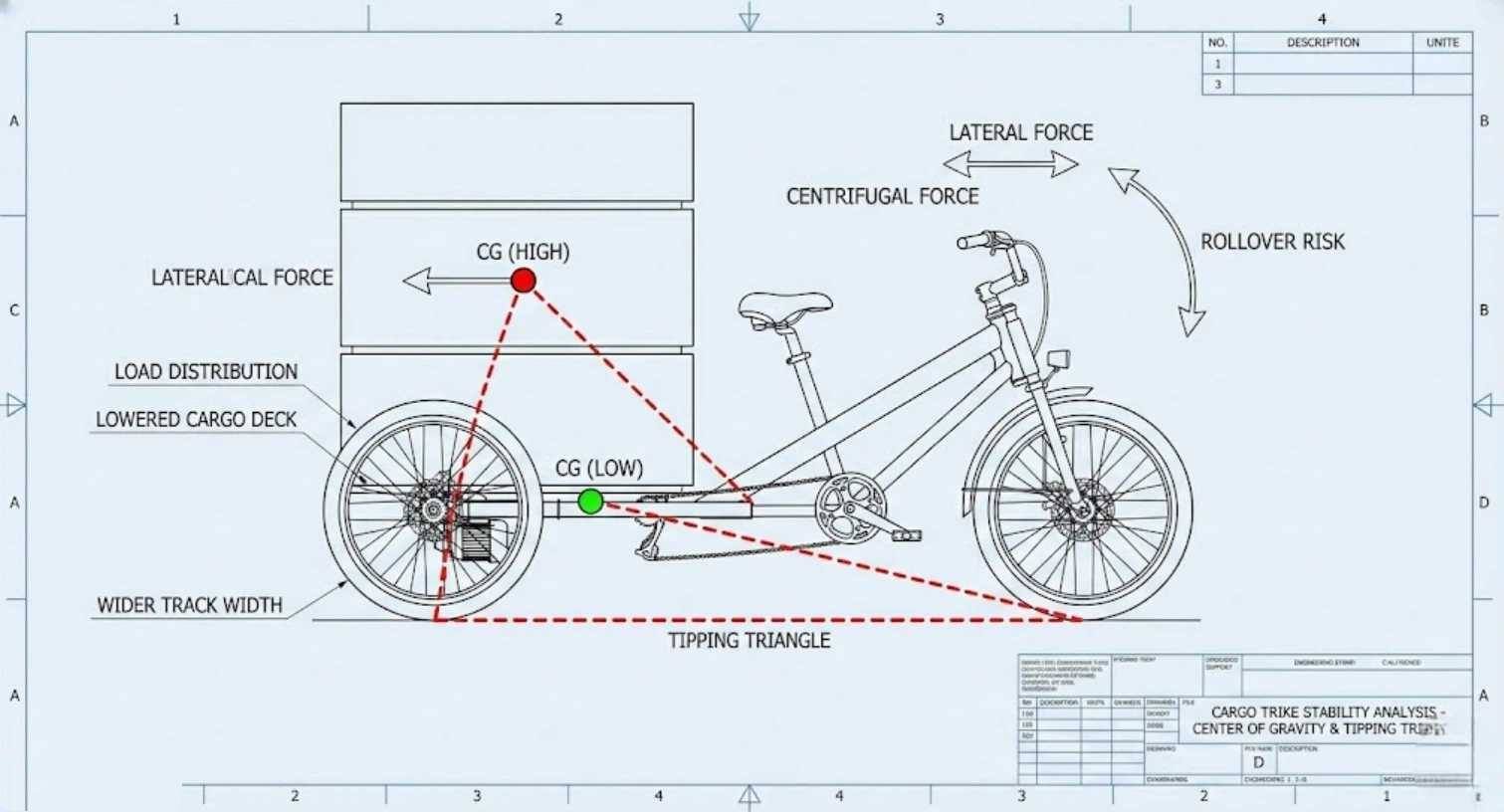
La física de un triciclo no perdona. A diferencia de una bicicleta, en la que el ciclista se inclina en una curva para contrarrestar la fuerza centrífuga, un triciclo comercial suele permanecer plano (a menos que sea basculante). Esto significa que toda la fuerza lateral generada durante un giro trata de inclinar el vehículo hacia el exterior de la curva.
Cuando diseñamos un chasis de alta resistencia, nos obsesionamos con el "triángulo basculante1", la forma geométrica formada por las tres zonas de contacto de los neumáticos. La carga debe permanecer dentro de este triángulo. Si un gestor de flota permite a los conductores apilar paquetes pesados de 1,5 metros de altura en un chasis estrecho, el brazo de palanca creado por esa altura actúa contra la suspensión. Incluso a baja velocidad (10 km/h), un giro brusco puede levantar la rueda interior.
Elementos clave del diseño para la estabilidad:
- Altura de la cubierta: Empujamos la cama de carga hacia abajo, a menudo por debajo de la línea del eje, para bajar la CoG.
- Ancho de vía: Un eje trasero más ancho aumenta el triángulo de estabilidad, lo que permite tomar las curvas a mayor velocidad sin volcar.
- Colocación de la batería: Colocamos los pesados paquetes de baterías en posición baja y central, a menudo bajo el asiento o la cubierta, para que actúen como anclaje de lastre del vehículo.
Si un fabricante te vende un triciclo con una cubierta alta y una distancia entre ejes estrecha afirmando que puede transportar 300 kg, te está vendiendo un riesgo de vuelco. La física no se negocia.
¿Por qué es fundamental un diferencial para que los triciclos de carga giren con cargas pesadas?
Hacer girar un vehículo pesado sin diferencial es una lucha contra la fricción. He visto ejes romperse simplemente porque un fabricante trató de ahorrar dinero mediante el uso de un diseño de eje vivo sólido.
Un diferencial permite que la rueda exterior gire más rápido que la interior durante un giro. Sin él, ambas ruedas se ven obligadas a girar a la misma velocidad, lo que provoca que la rueda interior roce y se arrastre contra el pavimento. Con una carga de 200 kg, esta fuerza destruye los neumáticos, rompe los ejes y destroza los engranajes de la transmisión.
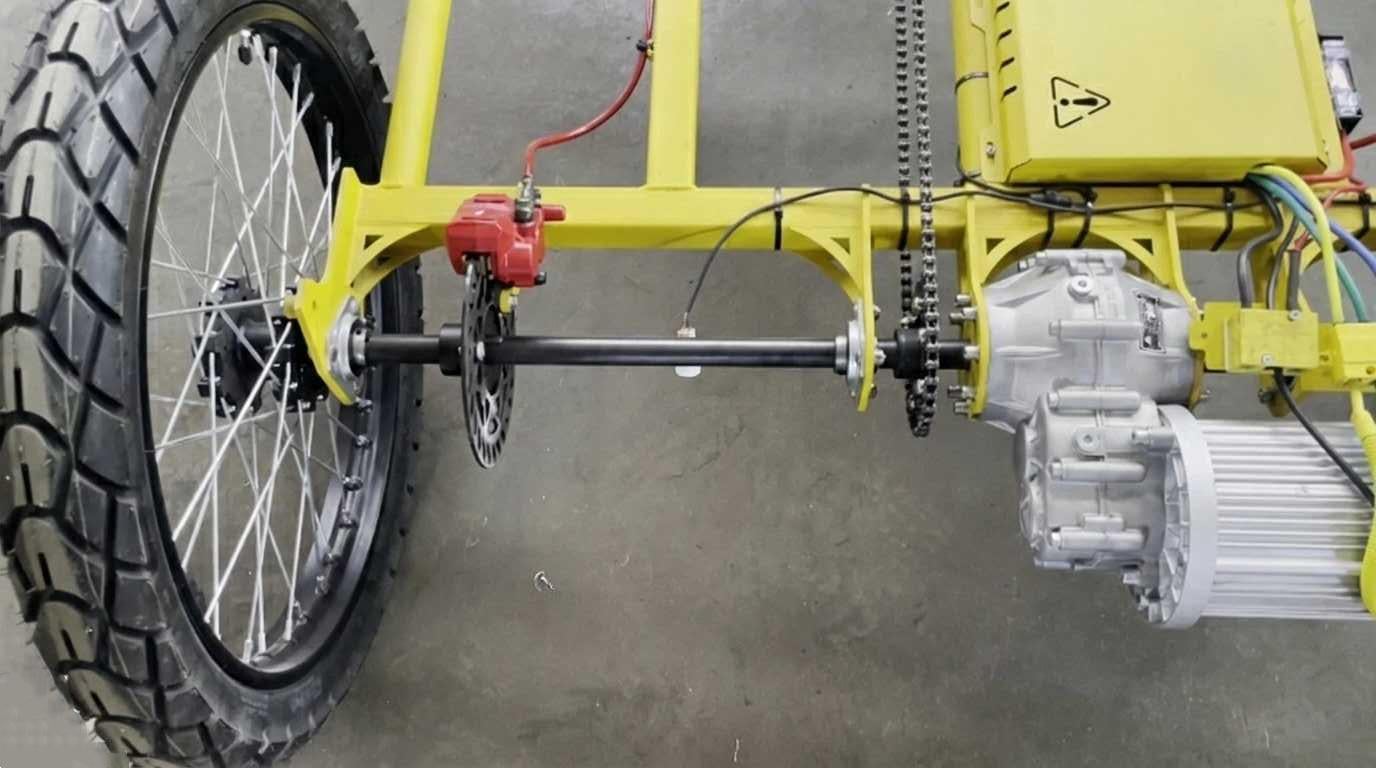
Al principio de mi carrera, vi fracasar muchos triciclos de carga "económicos" porque utilizaban un eje macizo (un "eje vivo"). En un camino de tierra, un eje macizo está bien porque la rueda puede resbalar en el suelo suelto. En asfalto urbano con neumáticos de gran adherencia, un eje macizo es un desastre mecánico.
Cuando un triciclo gira en una curva, la rueda exterior recorre una distancia mayor que la interior. La matemática es simple geometría. Si el eje es sólido, la rueda interior debe deslizarse (patinar) para igualar la distancia de la rueda exterior. Ahora, añade una carga útil de 250 kg. La fricción entre el neumático y la carretera es inmensa. El eje quiere torcerse. Los radios quieren cizallarse. La cadena está sometida a una tensión extrema.
Un diferencial de alta resistencia divide el par y elimina esta tensión de "fregado". Sin embargo, atornillar un endeble diferencial mecánico a un eje de bicicleta estándar es una medida a medias que sigue dejando el sistema vulnerable a la flexión bajo altas cargas verticales. La verdadera solución para cargas pesadas -y la arquitectura que diseñamos en Motrike para las modernas flotas de reparto urbano- se explica en nuestra guía para triciclos de carga sistemas de reparto de última millaConstruido en torno a un motor diferencial integrado en el eje trasero acoplado a dos semiejes reforzados.
- Motor diferencial integrado: Al alojar el engranaje diferencial directamente dentro del motor eléctrico trasero, eliminamos las vulnerables cadenas externas para la transmisión final. Proporciona un par equilibrado al instante, al tiempo que permite la rotación independiente de las ruedas para trazar las curvas con total suavidad.
- Semiejes dobles macizos: En lugar de depender de un único eje largo que se dobla bajo una carga útil de 300 kg, la potencia se transfiere del motor central a las ruedas a través de dos semiejes independientes, gruesos y de calidad automovilística.
Esta configuración se comporta como un camión comercial más que como una bicicleta. Proporciona la libertad mecánica para girar sin fricción, al tiempo que mantiene la enorme integridad estructural necesaria para sobrevivir al abuso diario. Si su hoja de especificaciones dice "eje trasero macizo", no compre el vehículo.
¿Qué fuerzas laterales destruyen las ruedas de las bicicletas comerciales de carga?
Utilizar ruedas de bicicleta estándar en un triciclo de carga es el error de ingeniería más común del sector. El resultado son llantas colapsadas y radios rotos a las pocas semanas de su uso.
Las bicicletas se inclinan en los giros, manteniendo las fuerzas radiales (verticales respecto a la rueda). Los triciclos no se inclinan, sino que empujan lateralmente. Esto crea una enorme tensión lateral (carga lateral) que los radios finos estándar de las bicicletas y las llantas de pared simple no pueden soportar. Las ruedas de alta resistencia requieren radios 10G o 12G de calidad para motocicletas y rodamientos reforzados de tipo automovilístico para soportar esta carga lateral.
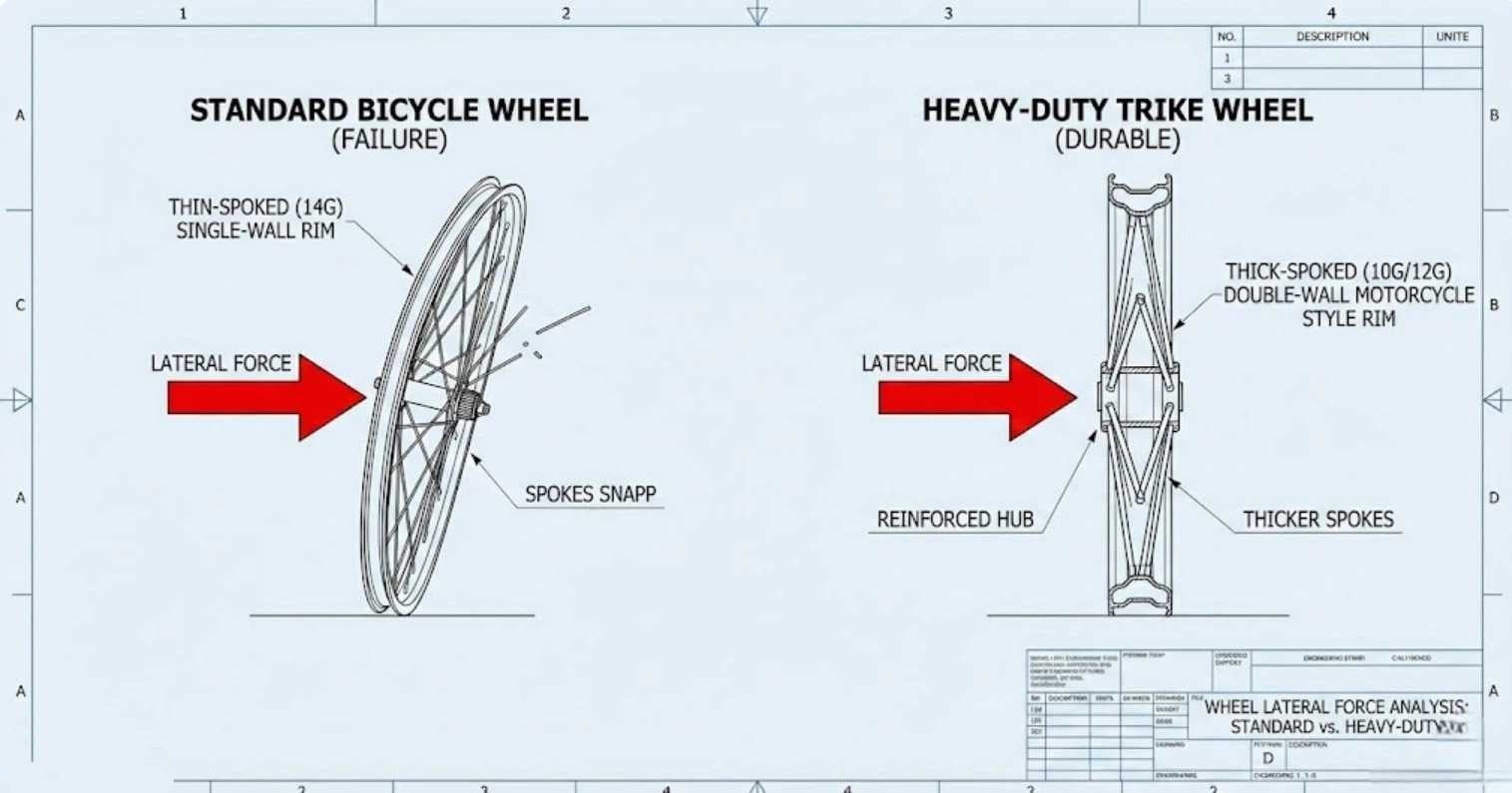
Analicemos las fuerzas. En un vehículo de dos ruedas, los radios están casi siempre bajo tensión en un plano vertical. La rueda está diseñada para soportar el peso hacia arriba y hacia abajo. En un vehículo rígido de tres ruedas, al girar a la derecha, la masa del vehículo intenta seguir recto. Esto empuja el cubo lateralmente mientras el neumático se agarra a la carretera. Esto intenta sacar el neumático de la llanta y doblar la rueda en forma de "taco".
Los radios de bicicleta estándar de calibre 14 son como palillos de dientes contra esta fuerza. Se romperán en la espiga o en la curva en J. Para un verdadero ciclo de trabajo comercial, dejamos de pensar como mecánicos de bicicletas y empezamos a pensar como mecánicos de motocicletas.
La especificación de ruedas para cargas pesadas:
- Portavoces: Mínimo calibre 12 (2,6 mm) o calibre 10 (3,2 mm). La diferencia en resistencia a la tracción es enorme.
- Llantas: Llantas de aleación de doble pared o de acero para motocicletas.
- Bujes: Utilizamos bujes integrados con cojinetes de cartucho sellados (de calidad automovilística), no cojinetes de bolas sueltas que se clavan y rechinan bajo cargas laterales.
Si oye un "ping" de sus ruedas al girar, es el sonido de los radios que pierden tensión. Es la cuenta atrás para una rueda colapsada.
¿Qué componentes determinan el tiempo de actividad en lugar de la carga útil anunciada?
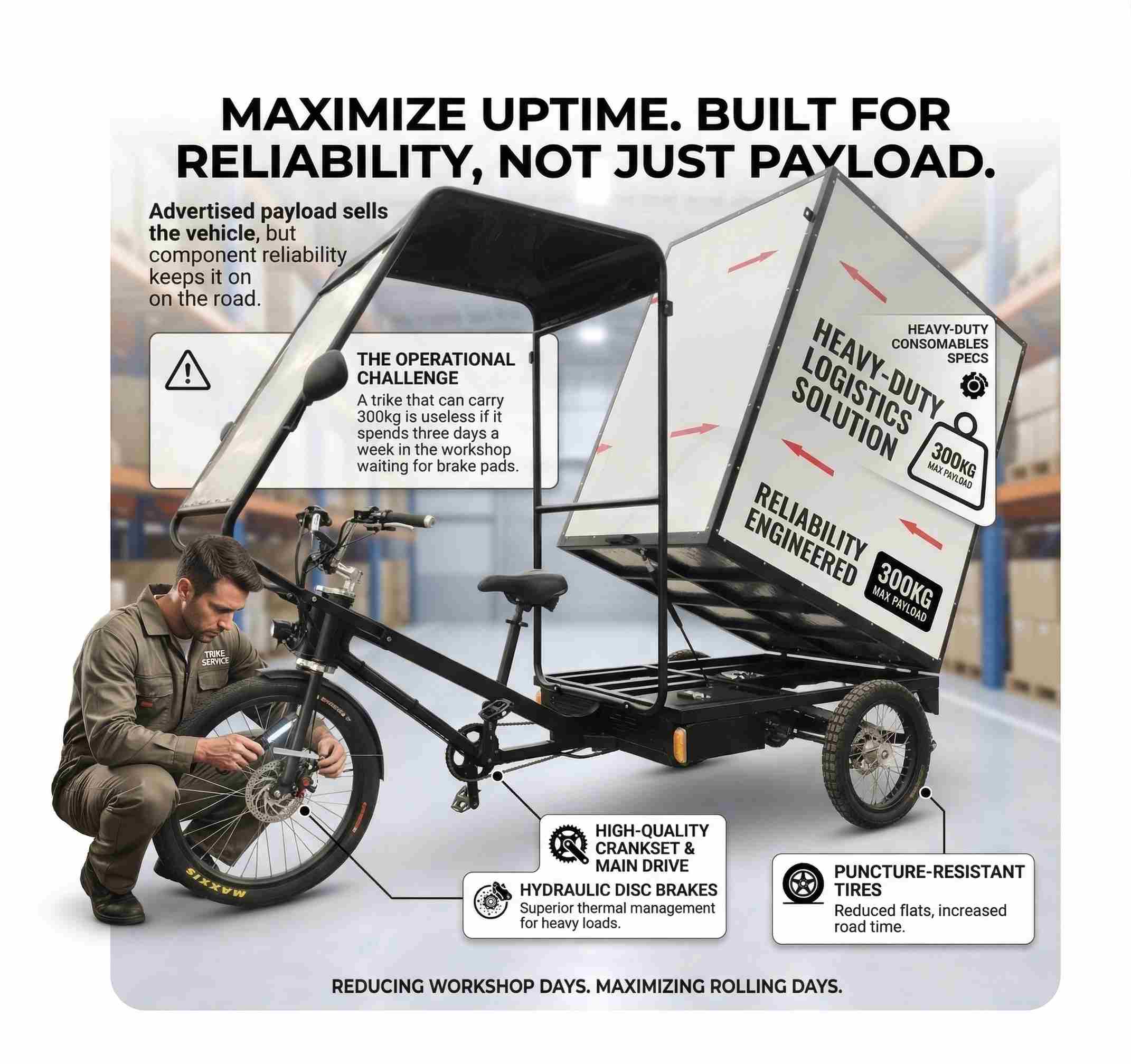
La carga útil anunciada vende el vehículo, pero la fiabilidad de los componentes lo mantiene en la carretera. Un triciclo que puede transportar 300 kg no sirve de nada si pasa tres días a la semana en el taller esperando pastillas de freno.
El tiempo de funcionamiento viene determinado por los "consumibles": frenos, cadenas y neumáticos. Las especificaciones para vehículos pesados deben incluir frenos de disco hidráulicos (para la gestión térmica), transmisiones de dos etapas2 utilizando gruesas cadenas de motocicleta para la transmisión final, y neumáticos resistentes a los pinchazos. Estos componentes sufren el mayor desgaste diario y son la causa principal de los tiempos de inactividad.
Cuando evalúo a un proveedor, me fijo en las piezas que se mueven.
Comience con el Transmisión. Un sistema de desviador de bicicleta estándar utilizado como transmisión final de la carga es un punto muy débil en los triciclos comerciales. La fina cadena necesaria para encajar entre esas marchas simplemente no puede soportar el par de mover una carga de 300 kg desde parado. En los trayectos con paradas y arranques, las cadenas se rompen y los desviadores se doblan constantemente.
- La solución: En Motrike lo solucionamos con una transmisión de dos etapas. Usamos una rueda libre de 8 velocidades en la etapa primaria para proporcionar al ciclista la eficiencia necesaria en el pedaleo, pero aislamos ese delicado mecanismo de cambio de la mayor tensión. La transmisión secundaria -la parte crucial que conecta el motor con el diferencial trasero- utiliza una gruesa cadena de motocicleta de una sola velocidad. Esta cadena soporta el inmenso par de carga sin romperse, proporcionando flexibilidad de cambio para el piloto y resistencia industrial para la carga.
A continuación, mire Frenos. Un freno de disco mecánico accionado por cable se estira. Requiere un ajuste constante, a veces diario.
- La solución: Sistemas hidráulicos. Se autoajustan en función del desgaste de las pastillas y proporcionan una enorme fuerza de apriete con poco esfuerzo de los dedos. También buscamos "frenos de estacionamiento". Un conductor de reparto aparca 60 veces al día. Si el freno de estacionamiento es un clip de plástico endeble, se romperá en una semana. Tiene que ser un sólido pestillo mecánico.
Los operadores de flotas suelen comparar estos factores de durabilidad con los costes de explotación de las furgonetas. Nuestro análisis de triciclo de carga vs furgoneta de reparto TCO ofrece un desglose detallado de la economía real del reparto en el centro de la ciudad.
Tabla: Vida útil de los componentes de las bicicletas de carga comerciales frente a las de consumo
| Componente | Bicicletas eléctricas de consumo | Grado comercial resistente |
|---|---|---|
| Pastillas de freno | 300 - 500 km | 1.500 - 2.000 km |
| Cadena | 1.000 km (tracción directa fina) | Más de 5.000 km (cadena secundaria de motocicletas) |
| Radios | Propenso a romperse semanalmente | Cero fallos en uso normal |
| Neumáticos | Pared lateral estándar | Clasificación "ciclomotor" reforzada |
¿Cómo deben evaluar las flotas la durabilidad antes de hacer pedidos al por mayor?
Nunca se fíe de una hoja de especificaciones. La única manera de verificar la durabilidad es reproducir las condiciones más duras de su operación específica antes de firmar el contrato.
Las flotas deberían realizar una "Prueba de Tortura". Cargue el vehículo al 110% de su capacidad nominal y condúzcalo por bordillos, adoquines y pendientes durante una semana completa. Inspeccione las soldaduras del bastidor en busca de grietas finas, compruebe la alineación de las ruedas y mida la caída de tensión de la batería bajo carga. Si el vehículo traquetea o está flojo después de una semana, no durará ni un año.
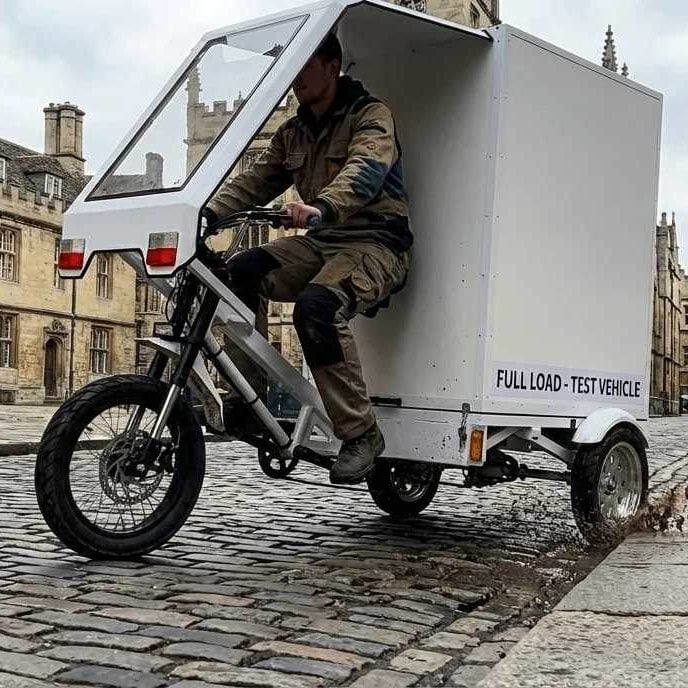
Aconsejo a mis clientes que ignoren el "paseo de prueba". Conducir un triciclo vacío por el suelo liso de un almacén no dice nada sobre su viabilidad comercial. Hay que simular el peor día de la vida del vehículo.
El Protocolo de Evaluación de Motrike:
- La caída del bordillo: Conduzca el triciclo completamente cargado desde un bordillo estándar (15 cm) repetidamente. Escucha los golpes. Si la suspensión toca fondo con dureza o el cuadro se flexiona visiblemente, el chasis es demasiado débil.
- El arranque en pendiente: Parar en una pendiente 15% con carga completa. Intente arrancar utilizando sólo el acelerador. Si el motor tartamudea, se sobrecalienta o hace ruidos de chirrido, el par es insuficiente para la entrega en el mundo real.
- Inspección de soldaduras: Después de la semana de prueba, limpie el cuadro y utilice una linterna para inspeccionar los puntos de tensión, normalmente alrededor del tubo de dirección (donde la horquilla se une al cuadro) y los soportes del eje trasero. Las grietas en la pintura suelen ser el primer signo de fatiga del metal.
El tiempo de inactividad cuesta más que el propio vehículo. Una evaluación rigurosa previa a la compra es el seguro más barato que puede adquirir.
Conclusión
Para una visión completa de los sistemas logísticos de los triciclos de carga, las estructuras de las flotas y los modelos de reparto urbano, consulte nuestra guía sobre triciclo de carga reparto de última milla.
"Un triciclo de carga verdaderamente comercial requiere un sistema diferencial para girar con suavidad, ruedas de motocicleta para soportar cargas laterales y un centro de gravedad bajo para mayor seguridad y estabilidad. Un triciclo de carga verdaderamente comercial requiere un sistema diferencial para girar con suavidad, ruedas de motocicleta para soportar cargas laterales y un centro de gravedad bajo para mayor seguridad y estabilidad.
Cuando estos principios de ingeniería se aplican correctamente, los triciclos de carga se convierten en herramientas fiables para la logística urbana moderna, y no sólo en bicicletas ligeras adaptadas a la carga.
Especificar estos detalles garantiza que su flota sobreviva en la calle, no sólo en la hoja de cálculo.
 EN
EN  RU
RU  FR
FR  DE
DE  ES
ES