
Are cargo trikes legally allowed in city centers and bike lanes?
Many fleet managers hesitate to adopt cargo bike trikes because they fear regulatory gray areas. They worry that a police officer might impound a vehicle mid-delivery, causing reputational damage and operational chaos.
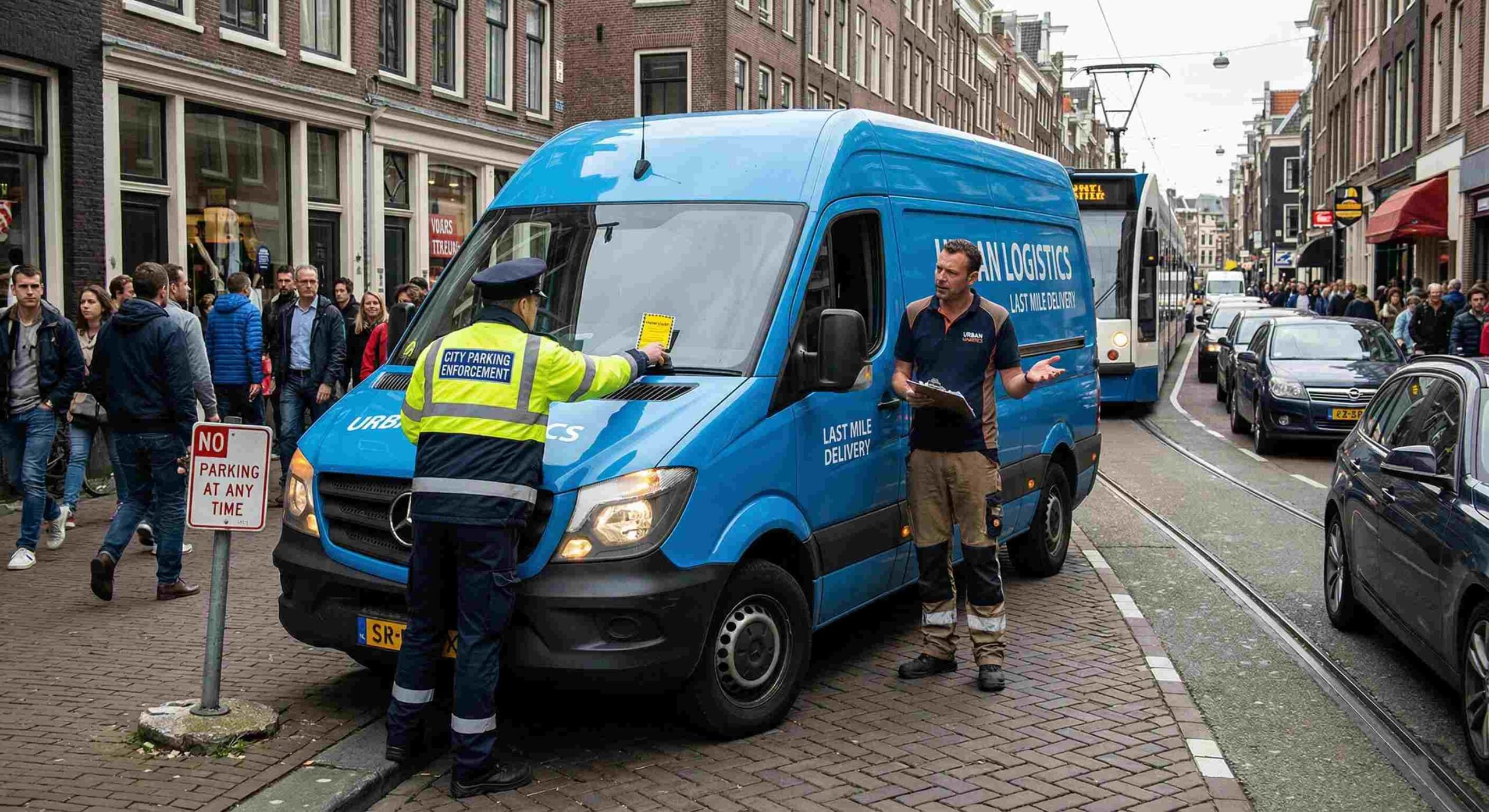
In most jurisdictions, cargo bike trikes are legally classified as bicycles and are permitted in bike lanes and pedestrian-priority zones, provided they adhere to specific power and speed limits. This access is their primary competitive advantage over vans, which are increasingly banned or heavily taxed in city centers.We explain this further in our article on how parking fines and congestion become structural costs in last mile delivery. However, this privilege depends strictly on adherence to the EN15194 standard (in Europe) or local e-bike classifications.
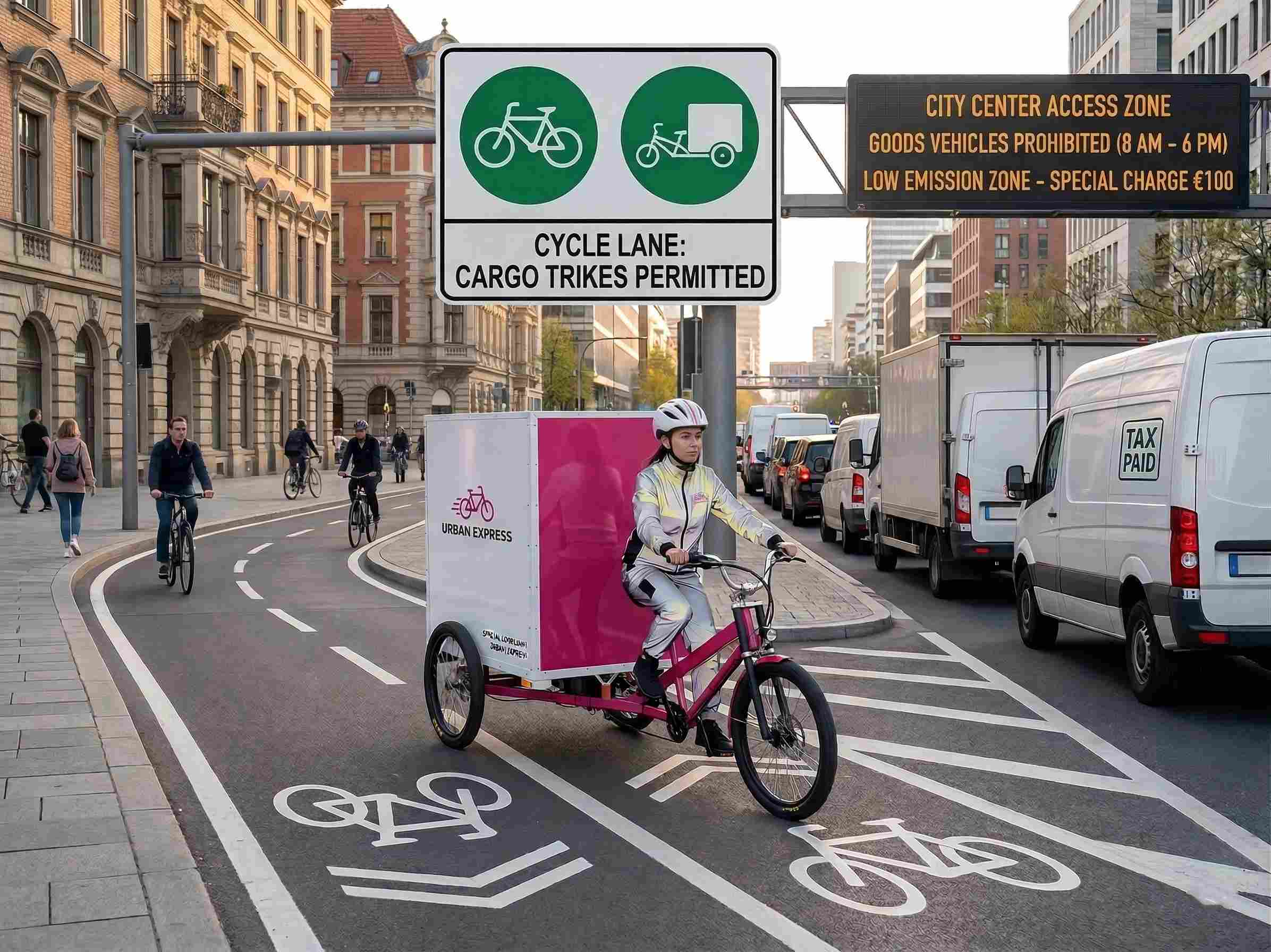
The regulatory landscape is binary: you are either a bicycle or a motor vehicle. If your trike fits the "Pedelec" definition (usually 250W motor, 25km/h assist limit, pedal-assist only), you gain the "Golden Ticket" of urban logistics: access to bike lanes, sidewalk parking, and pedestrian zones. This allows you to bypass traffic jams that trap vans.
However, I often see fleets importing "high-power" trikes (750W or 1000W throttle-controlled) hoping to gain speed. This is a fatal strategic error. These vehicles are legally classified as mopeds or light motorcycles. They require license plates, cannot use bike lanes, and must pay for parking. By chasing horsepower, you lose the very infrastructure advantage that makes trikes efficient. Compliance is not just about avoiding fines; it is about preserving your access to the city’s arteries.
Do riders need licenses, and how do pedelec rules differ by speed class?
Staffing is the biggest headache for logistics companies today. Requiring a commercial driver’s license restricts your hiring pool significantly, driving up wages and creating labor shortages during peak seasons.
For standard EPAC (Electrically Power Assisted Cycles) complying with the 250W/25km/h limit, no driver’s license is required. This drastically lowers the barrier to entry, allowing you to hire students, part-time workers, or cyclists without automotive credentials.
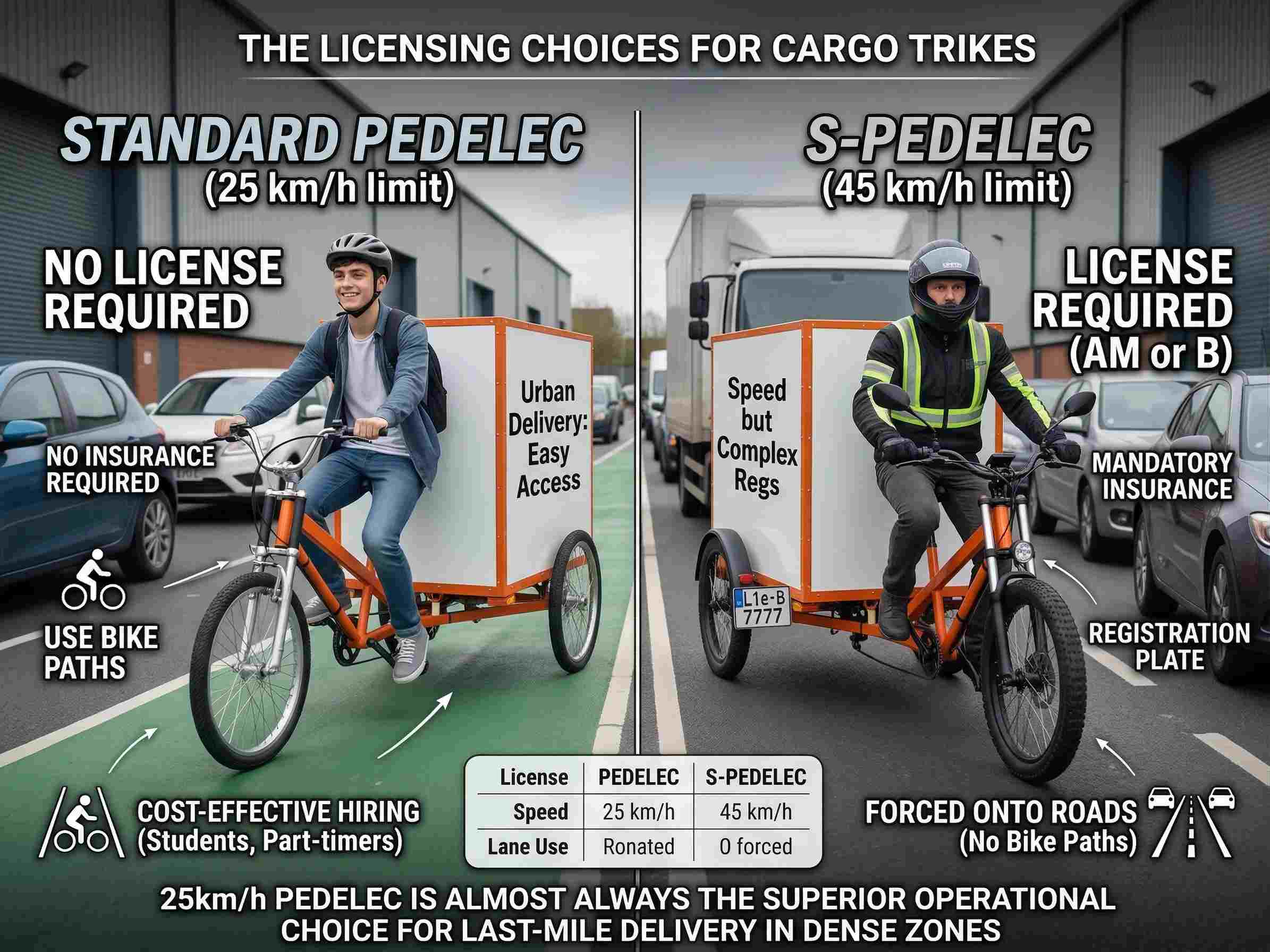
We must distinguish clearly between "Pedelecs" and "S-Pedelecs" (Speed Pedelecs).
A standard Pedelec stops assisting at 25km/h. It requires no insurance (though recommended), no license, and no registration.
An S-Pedelec assists up to 45km/h. Legally, this is a moped (L1e-B class). It requires a driver’s license (AM or B), a helmet, a license plate, and mandatory third-party liability insurance.
From an operational perspective, the S-Pedelec seems attractive for speed, but it introduces "friction costs." You must manage driver credentials, vehicle registration renewals, and stricter parking rules. Furthermore, because S-Pedelecs are often banned from bike paths, they are forced into car traffic, where they are actually slower than standard trikes during rush hour. For last-mile delivery in dense zones, the license-free 25km/h vehicle is almost always the superior operational choice.
What insurance risks concern procurement teams the most?
Procurement teams often treat cargo trike insurance like bicycle theft insurance. This is a dangerous oversimplification that exposes the company to potential bankruptcy from liability claims.
The three pillars of commercial cargo bike insurance are General Liability, Asset Protection, and Business Interruption. While personal e-bikes do not require liability insurance, a commercial fleet operating without it is taking an unacceptable risk regarding third-party injury and property damage.
The specific risk that keeps me awake at night is "Commercial Use Exclusion." Many standard insurance policies cover e-bikes but explicitly exclude "courier," "delivery," or "commercial hire" activities. If your rider scratches a luxury car or injures a pedestrian while delivering a package, and your policy has this exclusion, the insurer will deny the claim. The liability then falls 100% on your company.This is one reason why purchase price alone cannot reflect the real delivery cost of a commercial fleet.
Additionally, "Away from Home" theft coverage is critical. Most policies cover theft from your locked warehouse. But delivery vehicles are most vulnerable when parked on the street while the rider is inside a building. You must verify that your policy covers theft when the vehicle is "temporarily stationary during the course of work," provided it is locked to an immovable object. If you do not check the fine print, you are effectively self-insuring your entire fleet against theft.
Why does vehicle behavior change dramatically under full load?
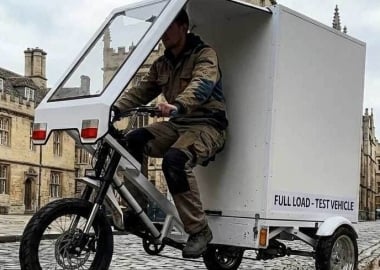
A cargo bike trike is not a static object; it is a dynamic mechanical system. Adding 200kg of cargo does not just make the bike heavier; it fundamentally alters the geometry of how it handles, steers, and stops.
The most critical change is the shift in the Center of Gravity (CoG). Unloaded, a trike is stable. Loaded, especially with high-stacked parcels, the CoG rises and moves backward. This creates a longer "lever arm" acting on the suspension, making the trike prone to tipping during cornering and losing traction on steep climbs.
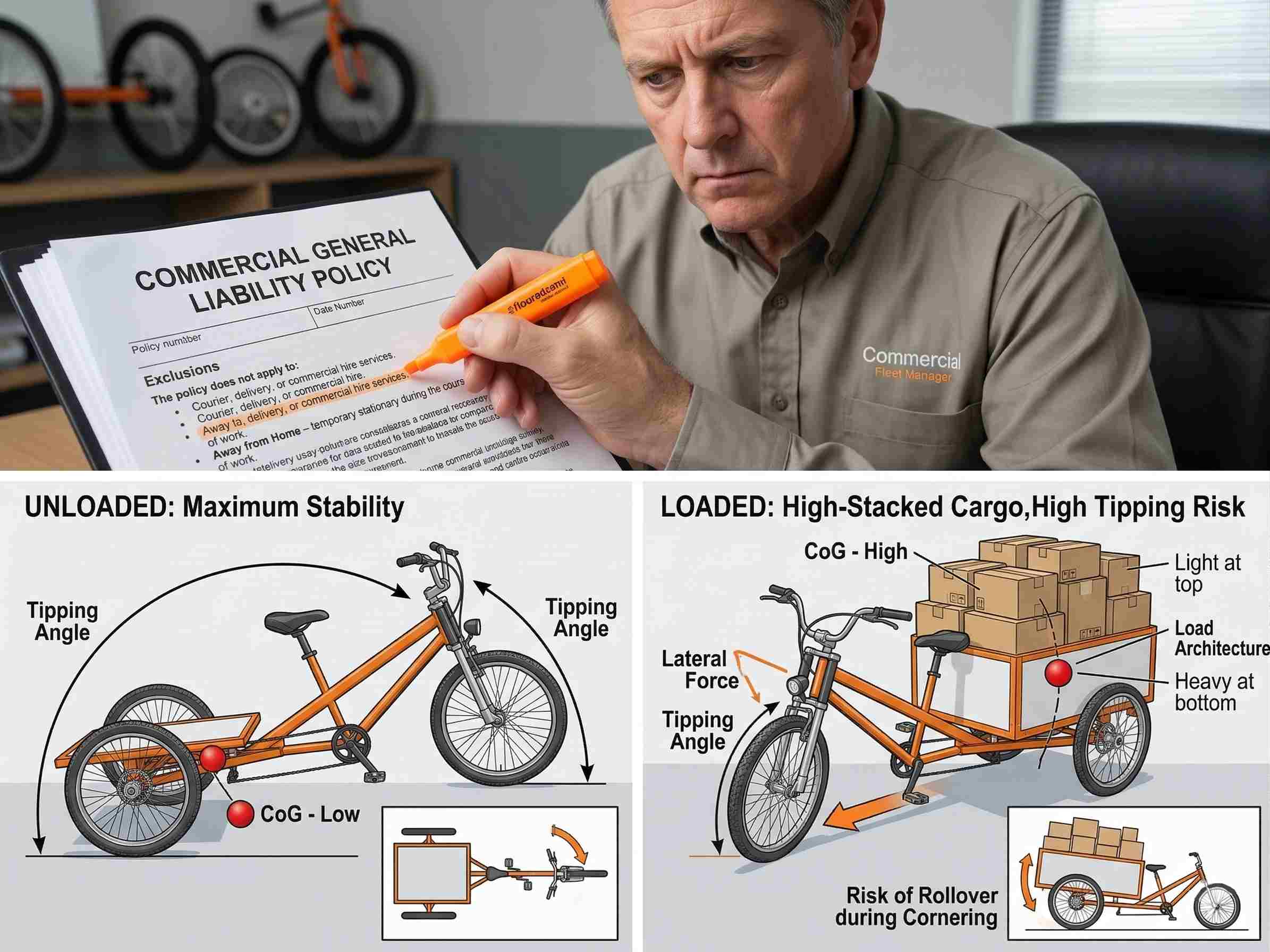
Physics dictates that as the center of gravity rises, the "tipping angle" decreases. On an empty trike, you might be able to take a corner at 15km/h. With a tall load, that same corner at 15km/h generates enough lateral force to lift the inside wheel, potentially flipping the vehicle.
Furthermore, we see the "Pendulum Effect" in steering. If the load is placed too far forward or backward relative to the steering axis, it creates inertia. When the rider turns the handlebars, the mass wants to keep going straight. This results in sluggish steering response followed by oversteer.
To mitigate this, we design our frames with a "Low-Deck" philosophy, keeping the load floor below the axle line whenever possible. Operational managers must also train riders on "Load Architecture"—placing heavy items at the bottom and light items at the top. Ignoring physics leads to rolled vehicles and damaged goods.
Which safety components matter most in downhill and emergency braking?
In flat cities, almost any brake works. In hilly terrain with a heavy load, braking is not about stopping power; it is about thermal management. A system that cannot shed heat will fail catastrophically.
The most critical safety components are the braking thermal capacity (rotor size and thickness) and the tire sidewall integrity. Standard bicycle disc brakes are designed to stop a 100kg human. They are not designed to stop a 300kg moving mass repeatedly on a 10% decline.
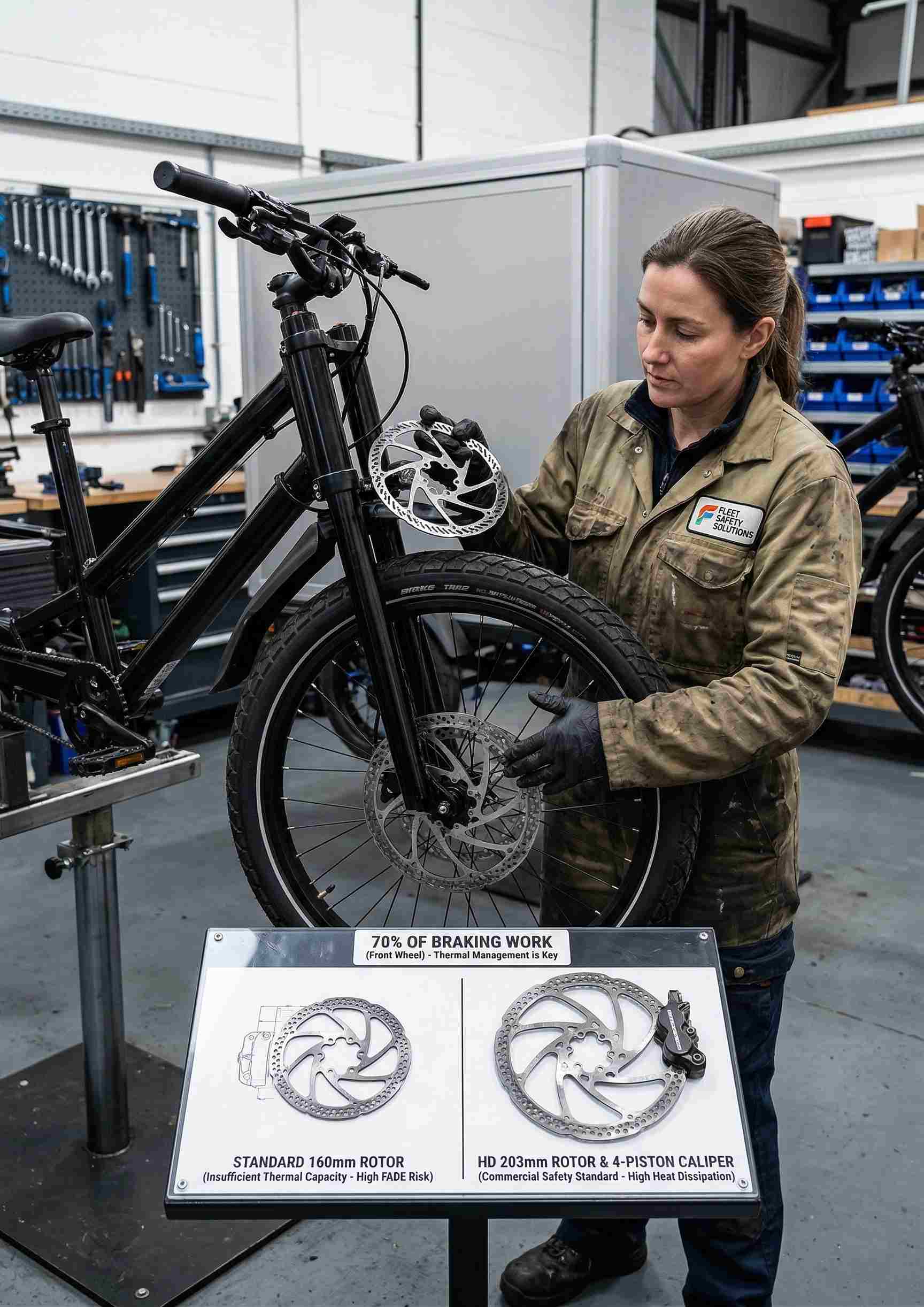
When a fully loaded trike brakes downhill, kinetic energy is converted into heat. If the brake rotors are too small (standard 160mm), they reach critical temperature within seconds. This causes "brake fade," where the hydraulic fluid boils or the pads glaze over. The lever feels hard, but the bike does not stop.
For commercial safety, I refuse to use anything less than 203mm reinforced rotors and 4-piston hydraulic calipers. Cable brakes are unacceptable because the cables stretch under the high tension needed to stop heavy loads, leading to inconsistent performance.
Additionally, the front brake does 70% of the work due to weight transfer. We often see fleets wearing out rear brakes because riders are afraid to use the front. Training riders to use both brakes simultaneously is a critical safety protocol that costs nothing but prevents accidents.
What design flaws lead to repeated insurance claims and downtime?
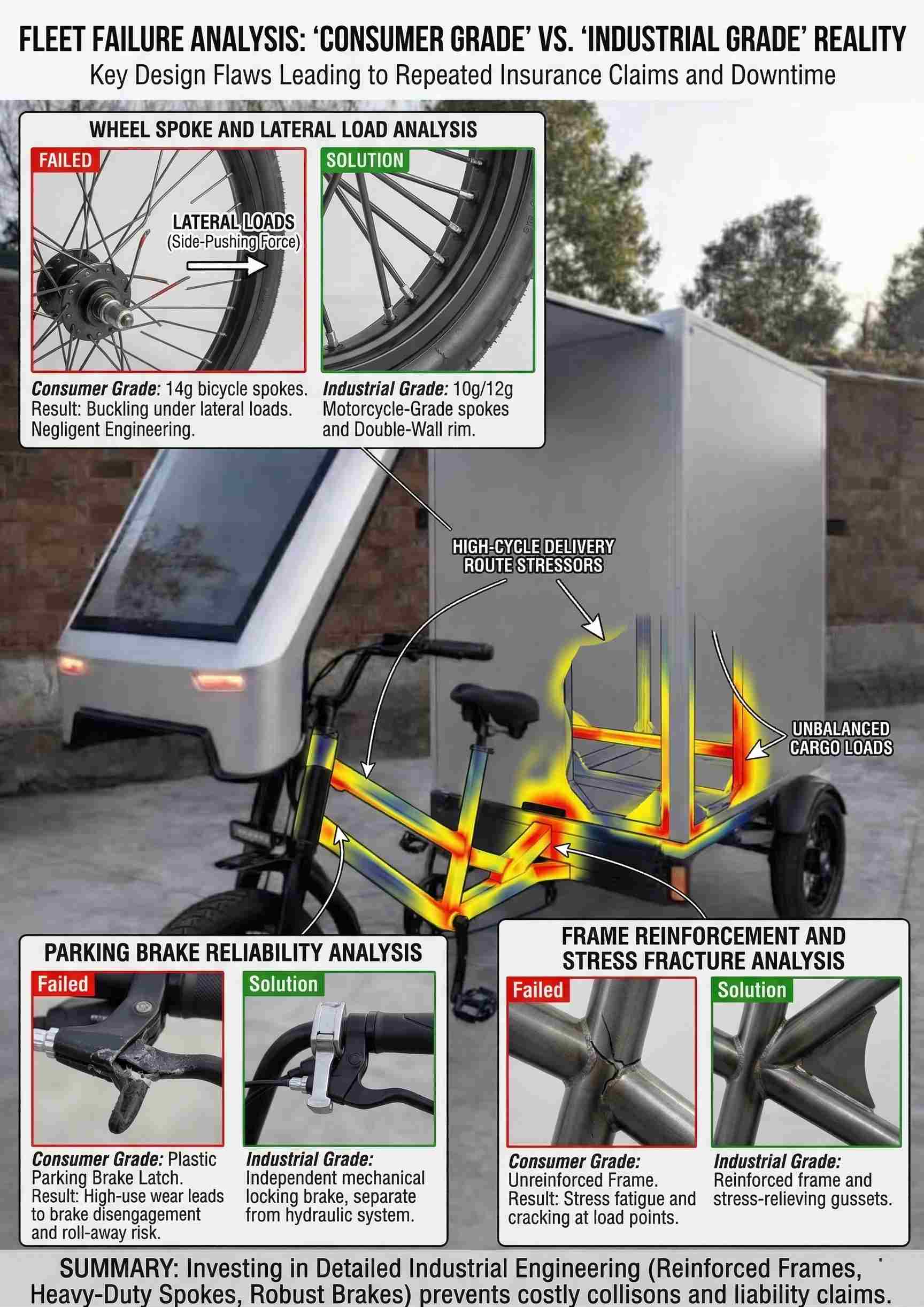
I investigate many fleet failures, and they are rarely "accidents." They are almost always the result of "Consumer Grade" engineering colliding with "Industrial Grade" reality.
The most common design flaws leading to claims are weak wheels (spoke failure), non-reinforced frames (cracking), and inadequate parking brakes (roll-aways). These mechanical failures cause loss of control, leading to collisions and insurance liabilities.
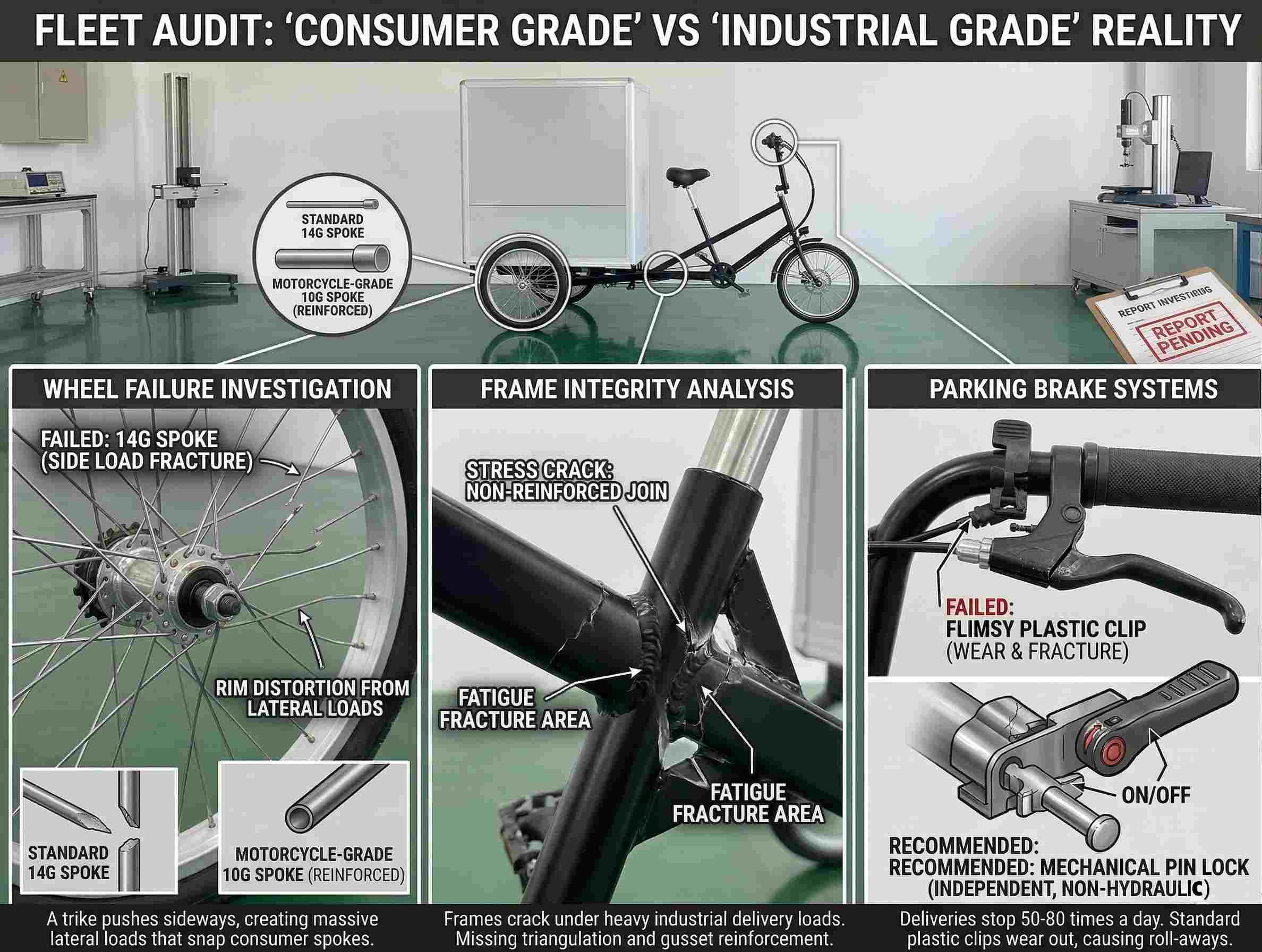
Let’s look at the wheels. A bicycle leans into a turn, so the forces on the spokes remain vertical (tension). A trike does not lean; it pushes sideways. This creates massive lateral loads that standard bicycle wheels were never designed to handle. Using standard 14g spokes on a cargo trike is negligent engineering. They will snap, the wheel will buckle ("taco"), and the rider will crash. We use motorcycle-grade 10g or 12g spokes and double-wall rims to handle these side loads.
Another hidden flaw is the parking brake. Delivery drivers park 50-80 times a day. If the parking brake is a flimsy plastic clip on the lever, it will wear out in a month. I have seen claims where a loaded trike rolled down a hill into a shop window because the parking brake disengaged. A commercial trike requires a mechanical locking latch, independent of the hydraulic system, to ensure the vehicle stays where you put it. Safety is detailed engineering, not just good intentions.
Conclusión
Safety is not a checkbox; it is a result of matching the machine’s engineering to the reality of the route.For a broader view of how cargo bike trikes compare with vans in urban logistics, read our complete guide to last mile delivery cargo trikes. By understanding the legal limits, insuring against real liabilities, and selecting vehicles built for the physics of heavy loads, fleet managers can build a network that is not just compliant, but reliable and safe.
 EN
EN  RU
RU  FR
FR  DE
DE  ES
ES