
Why are parking fines a structural cost rather than a behavioral issue?
Fleet managers often scold drivers for getting parking tickets, assuming it is a discipline problem. They are wrong. In 2026, parking fines in city centers are a structural cost caused by a mismatch between vehicle size and infrastructure availability.
When a delivery van enters a historic city center, there are often zero legal loading zones available. The driver has a binary choice: miss the delivery window or park illegally. Since the job requires delivery, the fine is not an error; it is the price of admission for using the wrong vehicle. No amount of driver training can manufacture a parking space where none exists.
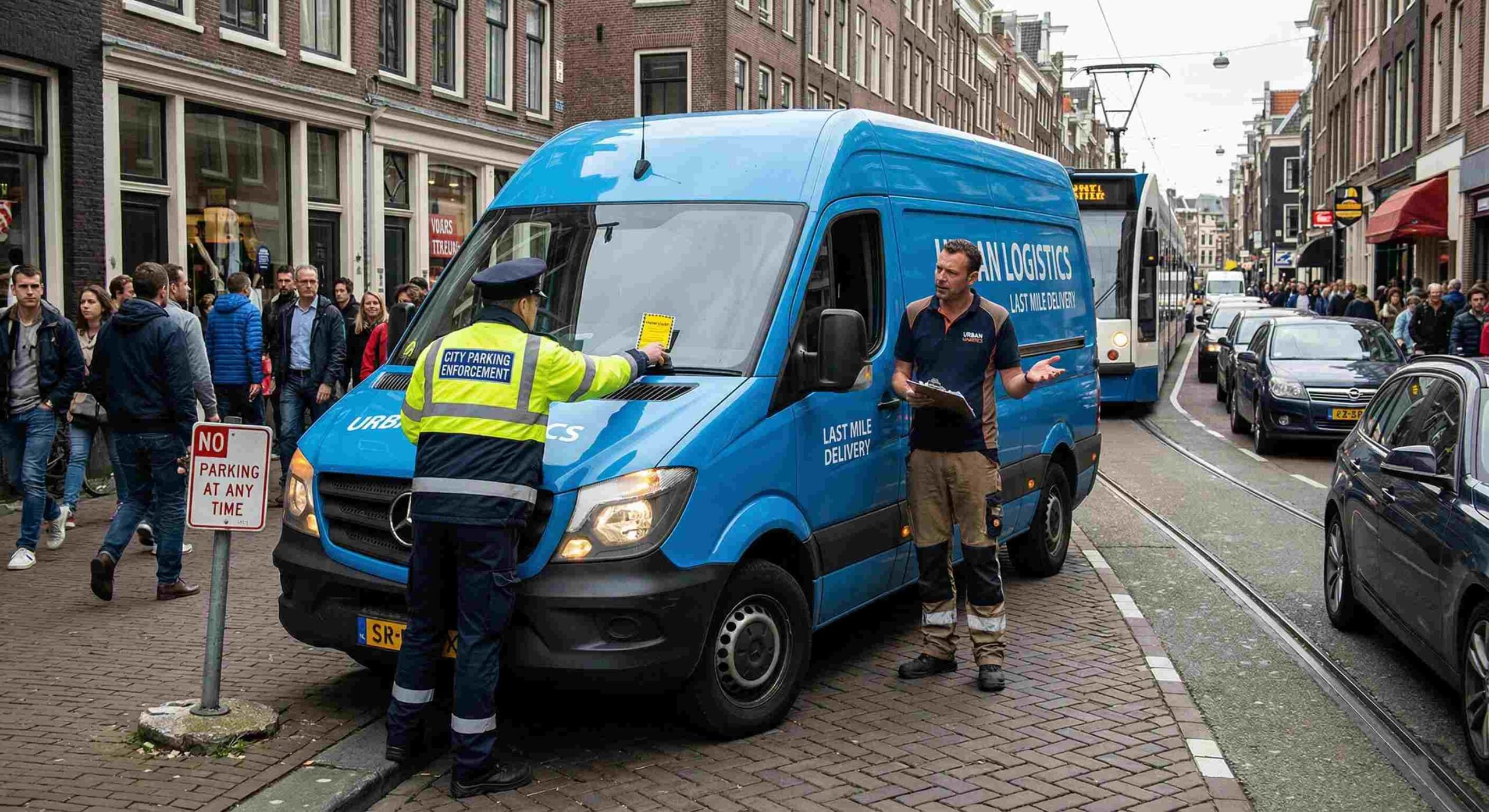
I tell my clients that if their business model relies on drivers "getting lucky" with parking, they do not have a strategy; they have a gambling addiction. A structural problem requires a structural solution. If the vehicle is too large to park legally, the vehicle—not the driver—is the root cause of the expense.
How does congestion convert paid driving time into lost productivity?
In urban logistics, time is the only inventory that expires instantly. When a van sits in gridlock, you are paying for fuel, insurance, and labor, but you are generating zero revenue. Congestion is a machine that converts operational budget into exhaust fumes.
Traffic does not affect all vehicles equally. A van is trapped in the flow of cars. It accelerates and brakes hundreds of times, burning diesel and wearing out clutches. Every minute spent idling is a minute subtracted from the delivery count. If a driver costs €25 per hour and spends 20 minutes per hour in traffic, your effective labor cost for actual work jumps by 50%.
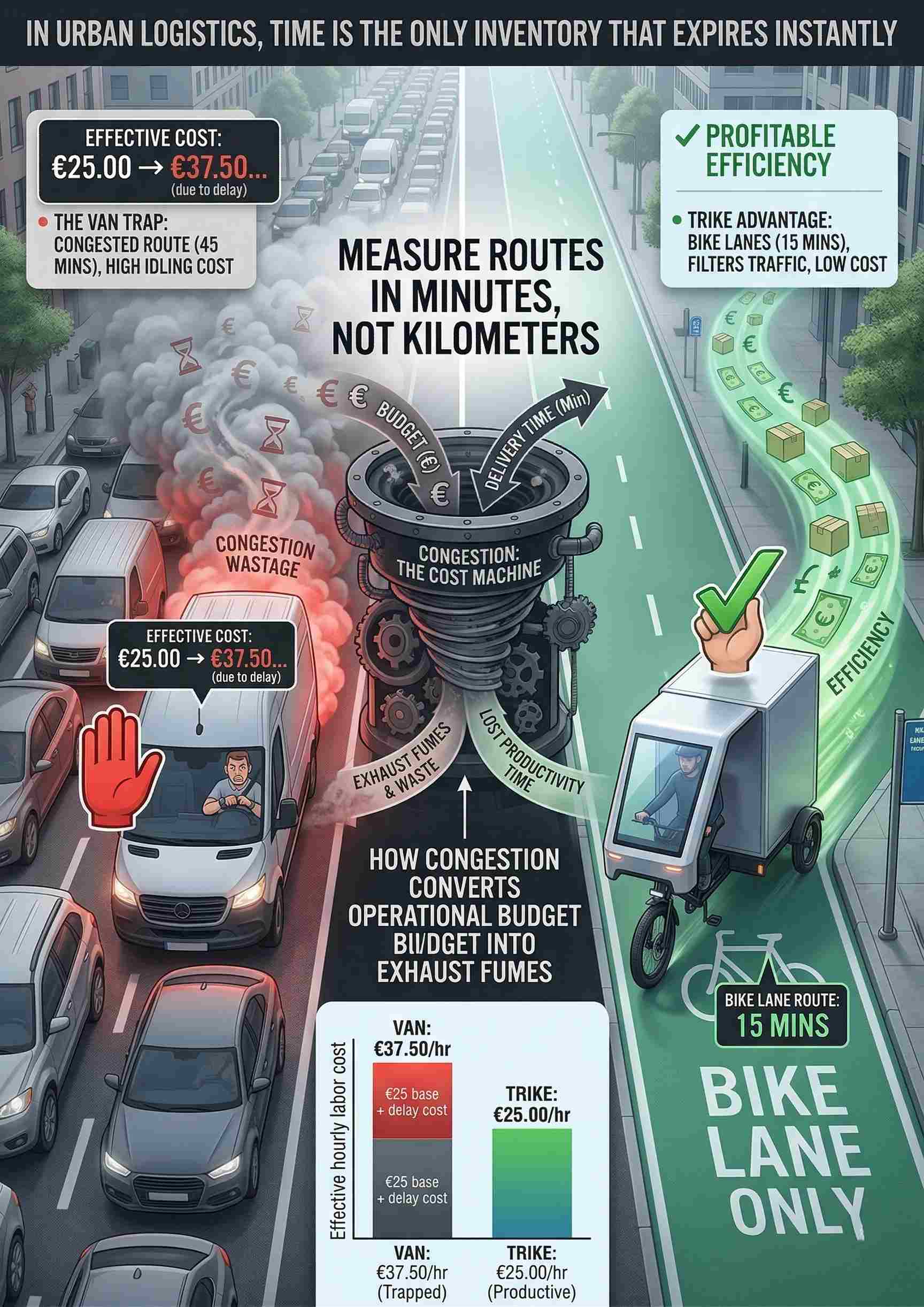
We need to stop measuring routes in kilometers and start measuring them in minutes. A 5km route in a van might take 45 minutes. A cargo Bike trike, utilizing bike lanes and filtering through traffic, might cover that same distance in 15 minutes. That 30-minute difference is pure profit leaking out of the tailpipe.
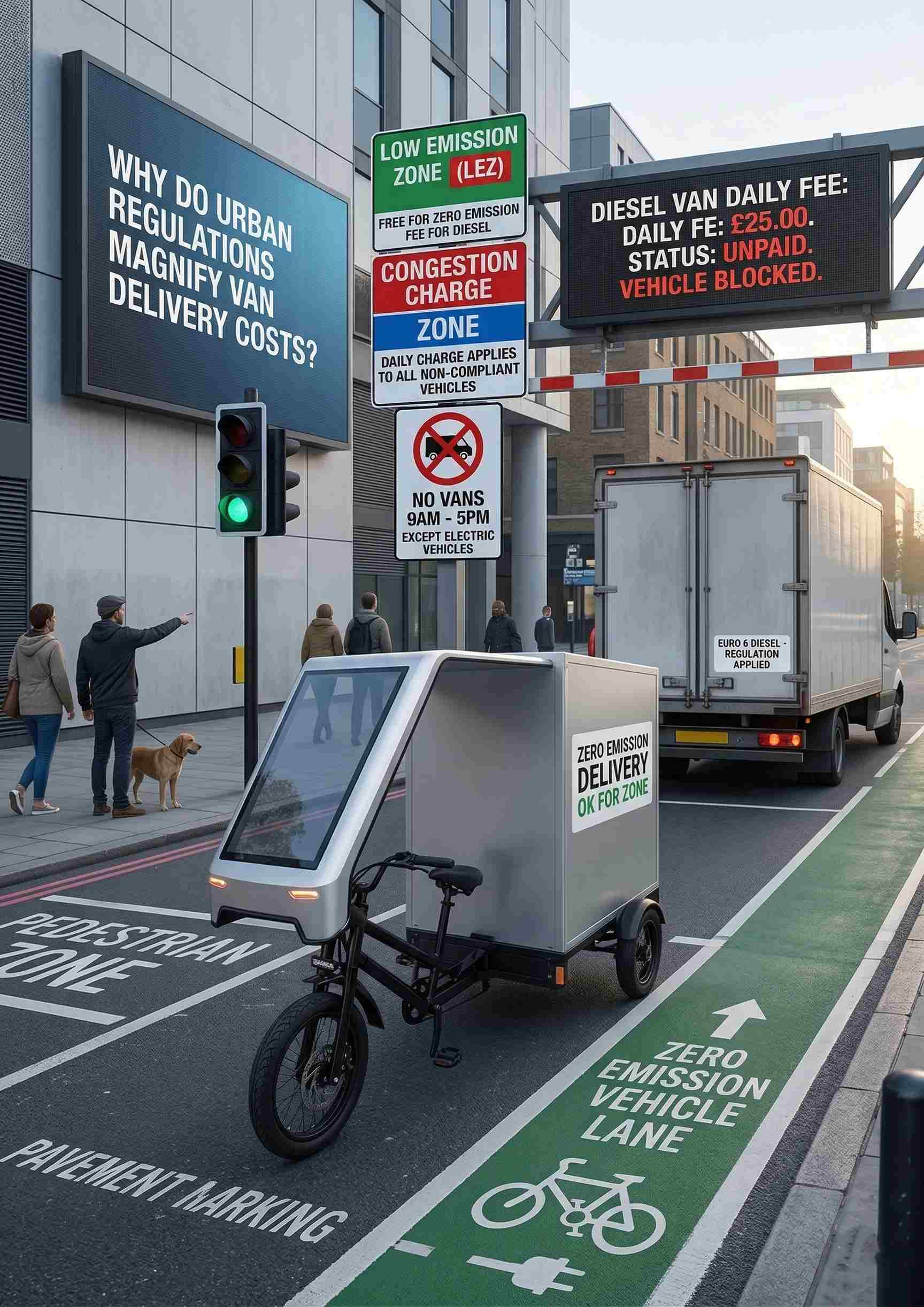
Why do urban regulations magnify van-related delivery costs?
Cities are actively designing vans out of the ecosystem. Low Emission Zones (LEZ), congestion charges, and strict time-window restrictions are not temporary annoyances; they are the new permanent reality of urban planning.
A diesel van operating in London or Paris today faces a daily "entry fee" that eats directly into the margin per package. Furthermore, many cities are implementing "pedestrian-first" zones where internal combustion vehicles are banned entirely during business hours. This forces vans to operate only at dawn or dusk, killing their utility for on-demand or same-day delivery services.
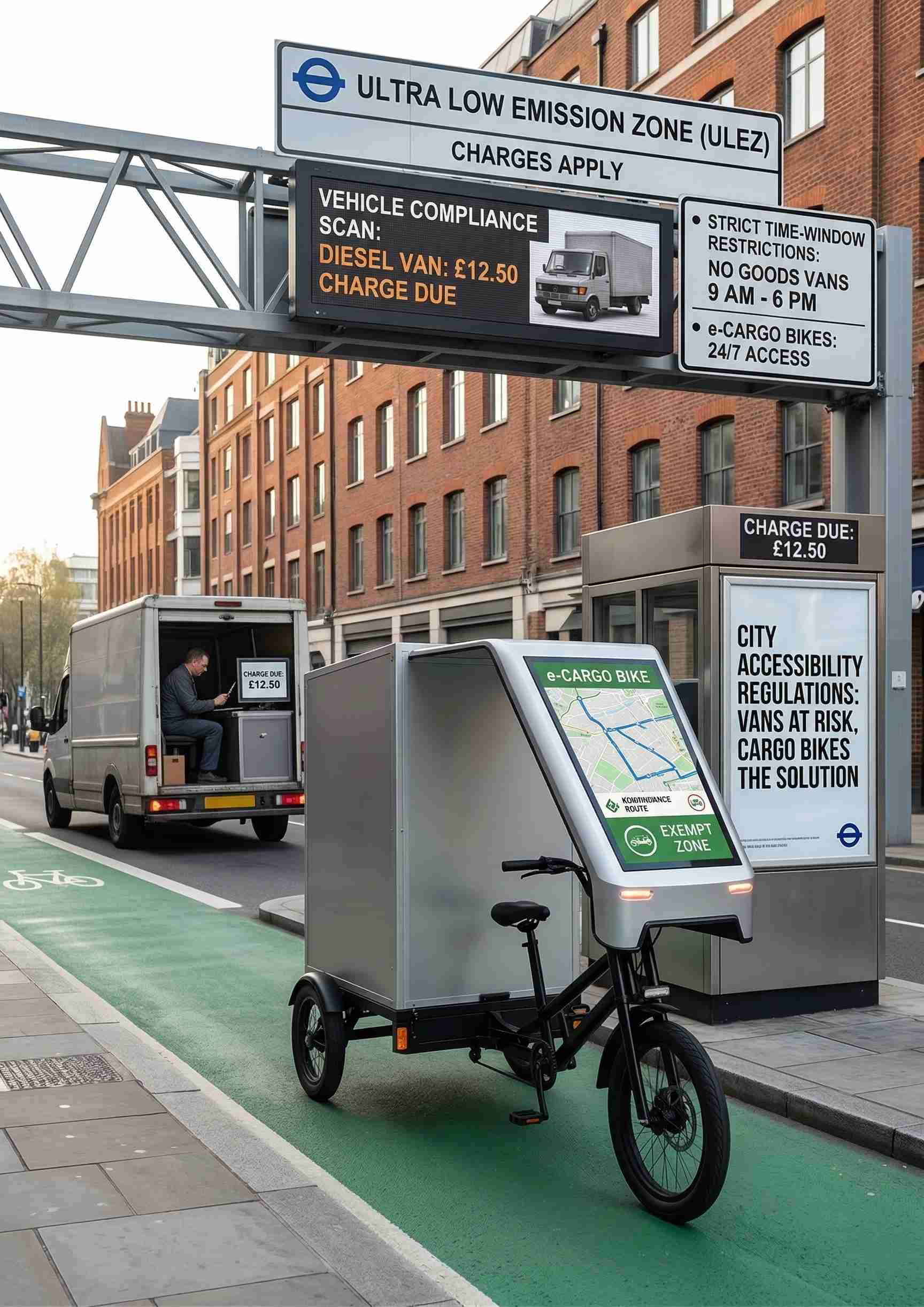
The regulatory pressure is increasing, not decreasing. If your fleet strategy relies on the hope that cities will become more friendly to 3-tonne trucks, you are betting against the trend. The cost of compliance for vans is rising faster than inflation, making the "status quo" the most expensive option on the table.
How does vehicle size directly affect stop efficiency and legality?
The "Last 50 Meters" is the most expensive part of the Last Mile. This is where vehicle size dictates efficiency. A large van incurs what I call the "Walking Tax."
Because a van cannot park in front of the customer’s door, the driver must find a spot 100 or 200 meters away. They then walk the package to the destination. This round trip might take 5 to 8 minutes. If you do this 50 times a day, you are paying the driver to walk for 4 hours. You have hired a professional hiker, not a courier.
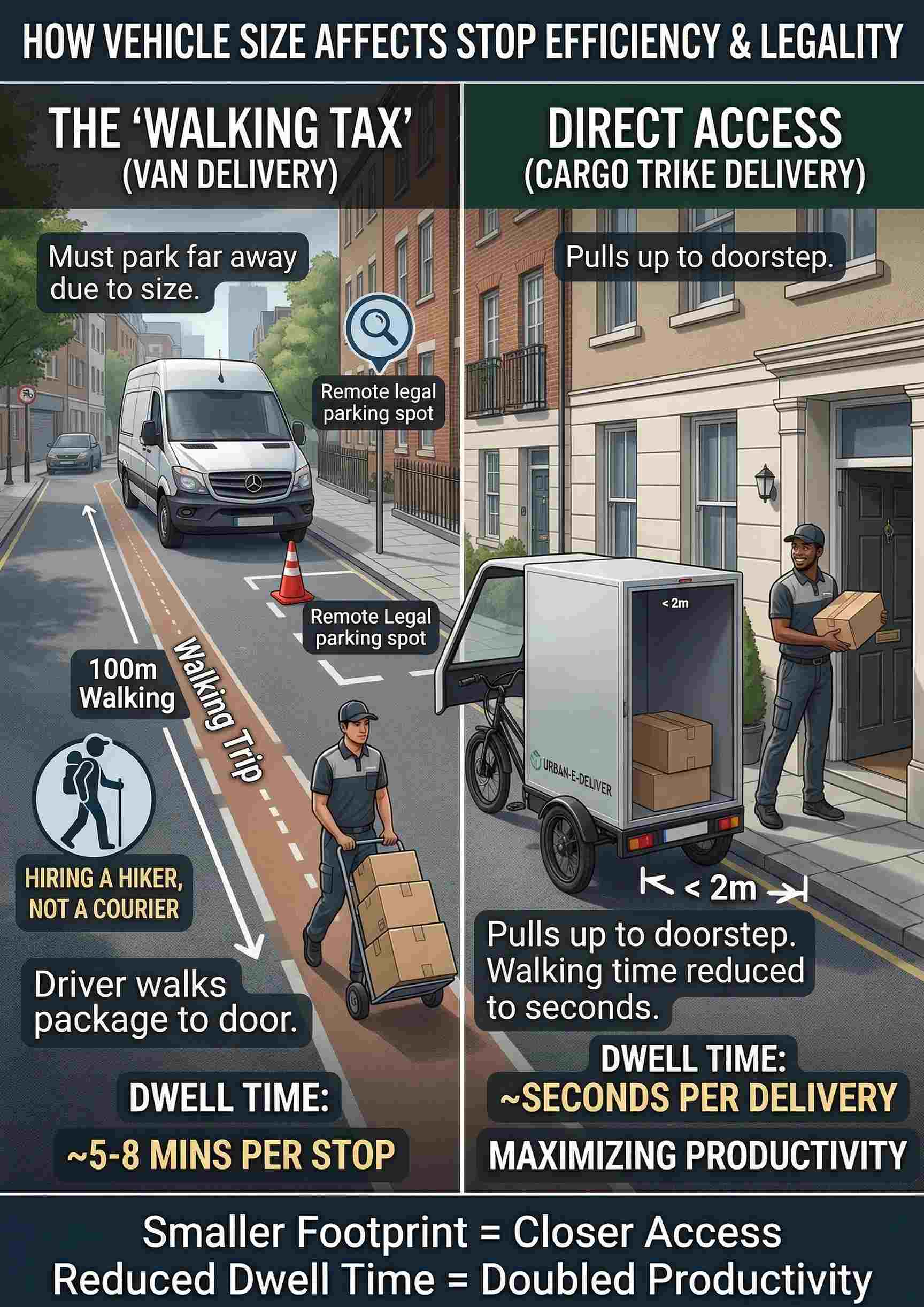
Physics is clear: a smaller footprint equals closer access. A cargo trike pulls up to the doorstep. The walking time is reduced to seconds. This reduction in "dwell time" (the time the vehicle is stationary) effectively doubles the driver’s productivity without the driver having to run.
Why do right-sized vehicles bypass this cost layer entirely?
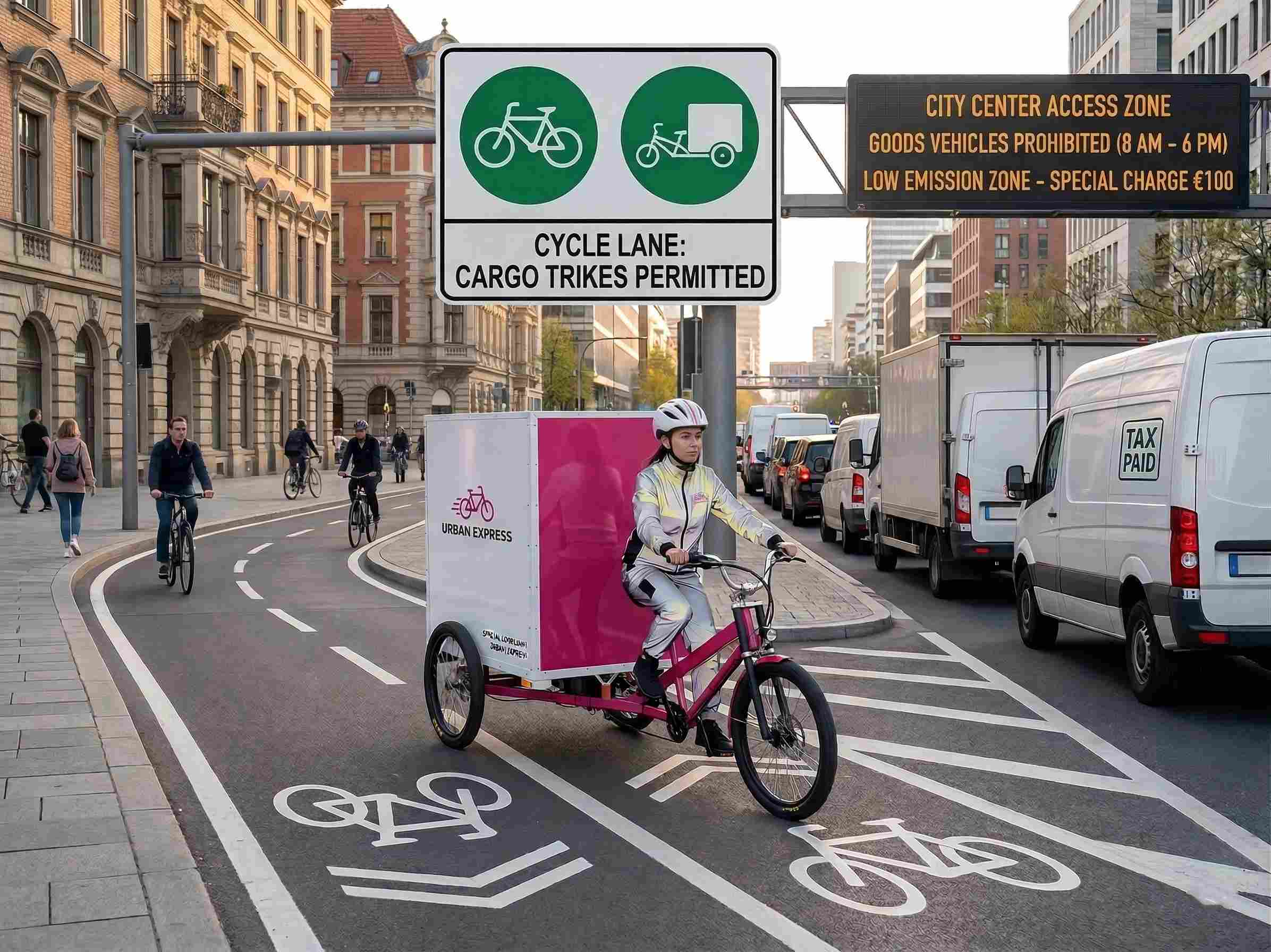
Switching to a cargo Bike trike is not just about being green; it is about regulatory arbitrage. A trike legally sidesteps the financial barriers erected against vans.
Because a trike is classified as a bicycle, it pays no congestion charge. It pays no parking fees. It is immune to Low Emission Zone taxes. It can legally park on the sidewalk or in designated bike spots right next to the delivery point.
This is "Frictionless Delivery." By removing the friction of finding parking and the friction of traffic jams, you remove the associated costs. The profitability comes from the absence of waste. You are no longer paying the city for the privilege of working; you are just working.
How do fleets regain profitability by changing vehicle type, not routes?
Many managers try to optimize their way out of this problem with software. They buy expensive routing AI to shave 2% off the drive time. But if the vehicle is fundamentally wrong for the environment, software is just polishing a broken process.
Regaining profitability requires a hardware pivot. For operators evaluating practical vehicle options, our electric cargo trike solutions are designed for dense urban delivery scenarios.When you replace a van with a cargo trike in the high-density zone, you instantly delete the line items for parking fines and congestion fuel burn. You replace a high-fixed-cost asset (van) with a low-operational-cost asset (trike).If you are still comparing vehicles by sticker price alone, this breakdown of real delivery cost explains why purchase price is often the wrong metric.
The Profit Formula Shift:
- Van Model: Revenue – (High Fuel + Parking Fines + High Depreciation + Walking Time) = Low Margin.
- Trike Model: Revenue – (Low Energy + Zero Fines + Low Depreciation + Zero Walking Time) = High Margin.
You do not need to make the driver faster. You just need to stop giving them a tool that fights the city.
Conclusión
Parking fines and congestion are not accidents; they are the inevitable result of using highway vehicles in pedestrian cities.For a broader view of why vehicle choice changes urban fleet economics, read our complete guide to cargo trikes for last mile delivery.Profitability returns when we stop fighting the infrastructure and start using vehicles designed to flow through it.
 EN
EN  RU
RU  FR
FR  DE
DE  ES
ES